You can post a great video on TikTok and still watch it flop. No traction. Barely any views. It happens more often than people admit.
Then you post something random at a different hour… and suddenly it takes off.
That’s not luck. Timing plays a bigger role than most people think.
TikTok doesn’t just care about what you post. It cares about when people are ready to engage with it. And if you hit that window, even a decent video can outperform a great one posted at the wrong time.
Let’s get into what actually works.
Why timing isn’t just a “nice to have”
Here’s the thing. TikTok pushes new content in waves.
When you post, your video is first shown to a small group of users. If those people watch it, like it, comment, or share—it gets pushed further. If they scroll past, it stalls out.
That early reaction window is everything.
Now imagine posting when your audience is asleep or busy at work. Even a strong video struggles to get traction because the right people aren’t there to engage.
But post when your audience is active? You give your video a real shot at momentum.
It’s like opening a coffee shop. You don’t want to open at 3 a.m. unless your customers are night shift workers.
Same idea here.
The general “best times” (and how to use them properly)
You’ve probably seen charts floating around with “best times to post.” They’re not useless—but they’re often oversimplified.
Still, there are patterns worth paying attention to.
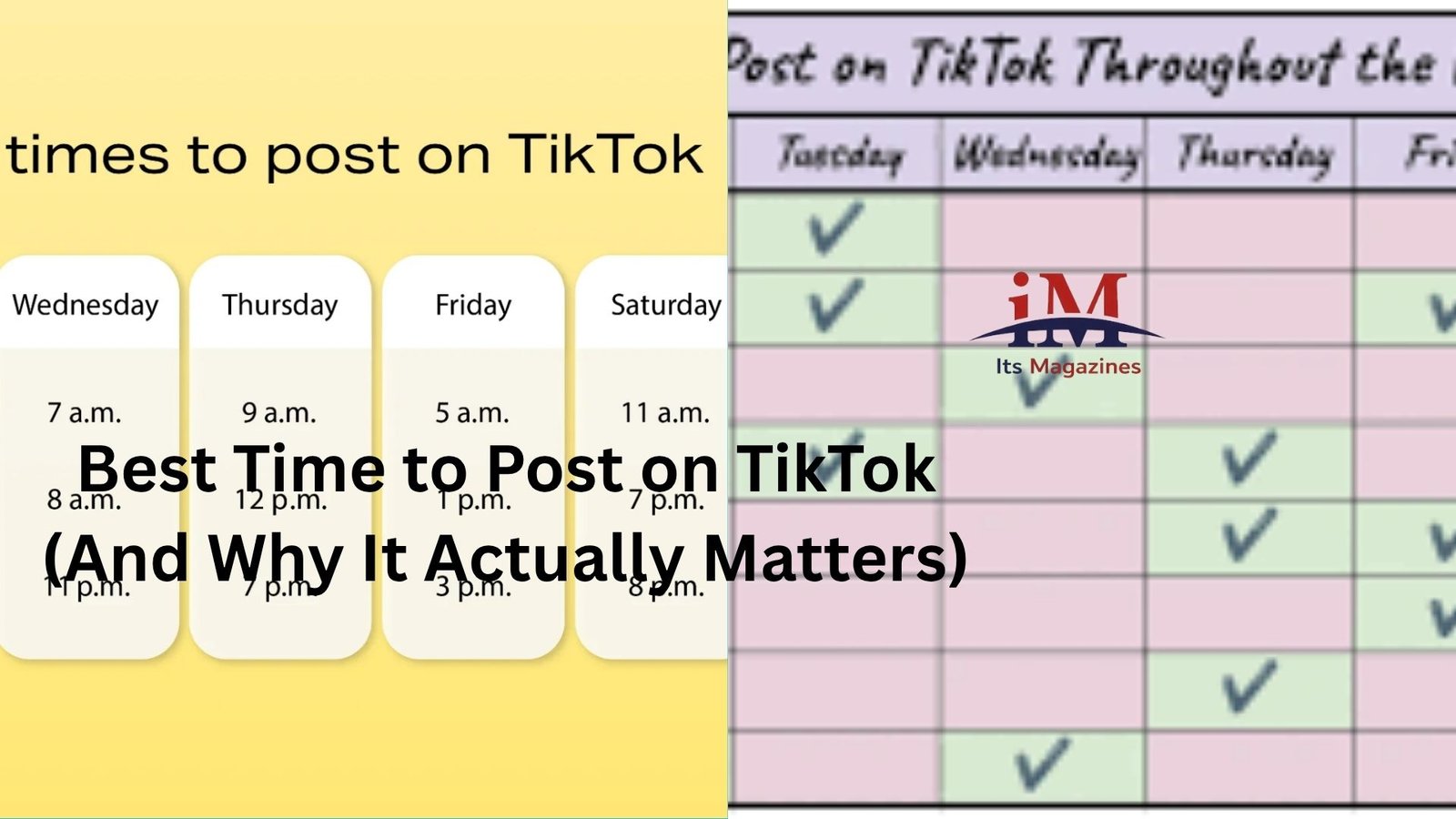
Across most TikTok accounts, engagement tends to peak during:
- Early morning (around 6–9 a.m.)
- Midday (11 a.m.–1 p.m.)
- Evening (6–10 p.m.)
Weekends shift a bit. People sleep in, scroll longer, and use TikTok more casually. Late mornings and evenings usually perform best.
But don’t treat these like rigid rules.
Think of them as starting points.
For example, someone posting fitness content might do well early in the morning when people are thinking about workouts. A comedy creator might see stronger results late at night when people are just unwinding.
Context matters.
Your audience matters more than any chart
Let’s be honest—your audience isn’t “everyone.”
And that’s a good thing.
The best posting time depends heavily on who’s watching your content.
If your audience is mostly students, your sweet spot might be late afternoon or evening. If it’s working professionals, lunchtime or after work might hit better.
Here’s a simple way to think about it:
When would your audience naturally scroll TikTok?
- Waiting for something
- Avoiding something
- Relaxing after something
Those are your windows.
A quick example. A small business owner posting behind-the-scenes bakery content noticed her videos did poorly in the morning. She switched to posting around 8 p.m.—right when people were relaxing after dinner—and her engagement doubled.
Nothing else changed. Just timing.
How to actually find your best posting time
You don’t need to guess forever.
TikTok gives you data—you just have to use it.
If you have a Pro or Business account, check your analytics. Look at when your followers are most active. TikTok breaks it down by hour and day.
Now here’s where people go wrong: they look once and assume that’s the answer.
It’s not that simple.
Your audience activity shifts over time. Seasons change. Habits change. Even your content style can attract a different type of viewer.
So instead of looking once, start observing patterns.
Post at different times over a couple of weeks. Notice what gets early engagement. Pay attention to:
- Views in the first hour
- Likes relative to views
- Comments coming in quickly or slowly
You’re not looking for perfection. You’re looking for trends.
The first hour is everything
TikTok’s algorithm doesn’t wait around.
The first hour after posting is often the most important window your video will get.
If engagement is strong, TikTok keeps pushing it.
If it’s weak, the video may never recover.
That’s why timing matters so much—it directly affects how your video performs in that first hour.
Think about it like sending a message. If you text someone at 3 a.m., you won’t get a response right away. But send that same message at 7 p.m.? You’ll probably get a reply in minutes.
TikTok works the same way.
Consistency beats perfection
A lot of people get stuck trying to find the perfect posting time.
They overthink it. They delay posting. They second-guess everything.
Meanwhile, someone else is just posting consistently—and growing faster.
Here’s the reality: consistency matters more than hitting the exact “perfect” minute.
Posting regularly helps TikTok understand your content. It also builds expectation with your audience.
If you tend to post every evening, people start to expect your content around that time. That familiarity helps engagement.
So yes, timing matters—but showing up regularly matters more.
Different content, different timing
Not all videos behave the same way.
Some content performs best when people are energized. Other content works better when they’re winding down.
For example:
Motivational or educational content often does well in the morning or early afternoon. People are in a mindset to learn or improve something.
Funny or entertaining content tends to perform better in the evening. That’s when people are scrolling to relax.
Quick relatable clips? Those can hit almost anytime, especially during short breaks.
So instead of asking, “What’s the best time to post?” try asking:
“When is my content most relevant to someone’s mood?”
That shift alone can improve your results.
Time zones can quietly ruin your reach
This one catches people off guard.
If your audience is spread across different regions, your “best time” gets a bit trickier.
Posting at 7 p.m. in your time zone might mean 2 p.m. for part of your audience—and 10 p.m. for another part.
If most of your followers are in a different time zone, you need to adjust.
Check your analytics again. See where your audience is located. If a large portion is elsewhere, prioritize their active hours, not yours.
It feels weird at first—posting at times that don’t match your own schedule—but it can make a noticeable difference.
Posting more than once a day? Timing matters even more
If you’re posting multiple times a day, spacing becomes important.
Dumping three videos back-to-back usually doesn’t work well. They end up competing with each other.
Instead, spread them out.
Morning, afternoon, evening. Give each video its own window to perform.
Also, watch how your audience responds. Some accounts thrive with multiple daily posts. Others see better results with one strong post per day.
There’s no universal rule here. But timing becomes more strategic the more you post.
Don’t ignore your own habits
Here’s something people don’t talk about enough: your own schedule matters too.
If you’re constantly forcing yourself to post at times that don’t fit your life, you’ll burn out or become inconsistent.
And inconsistency hurts more than slightly imperfect timing.
So find a balance.
Pick posting times that overlap with your audience’s activity and your own routine.
If evenings work for both, great. If not, adjust.
Sustainability beats short-term optimization.
When breaking the “rules” actually works
Sometimes, posting at an “off” time can work in your favor.
Less competition. Less noise. Your video might stand out more.
This is especially true if your content is strong and your audience is somewhat niche.
For example, posting late at night might work well if your audience includes night owls, gamers, or international viewers.
So don’t be afraid to experiment outside the usual windows.
Some of the best-performing posts come from unexpected timing.
The takeaway
There isn’t one perfect time to post on TikTok.
There are patterns. There are trends. But your best timing depends on your audience, your content, and your consistency.
Start with general peak hours. Pay attention to your analytics. Test different times. Watch how your videos perform in that first hour.
And most importantly—keep posting.
Because in the end, timing helps… but it’s not magic. The real growth comes from showing up, learning what works, and adjusting as you go.