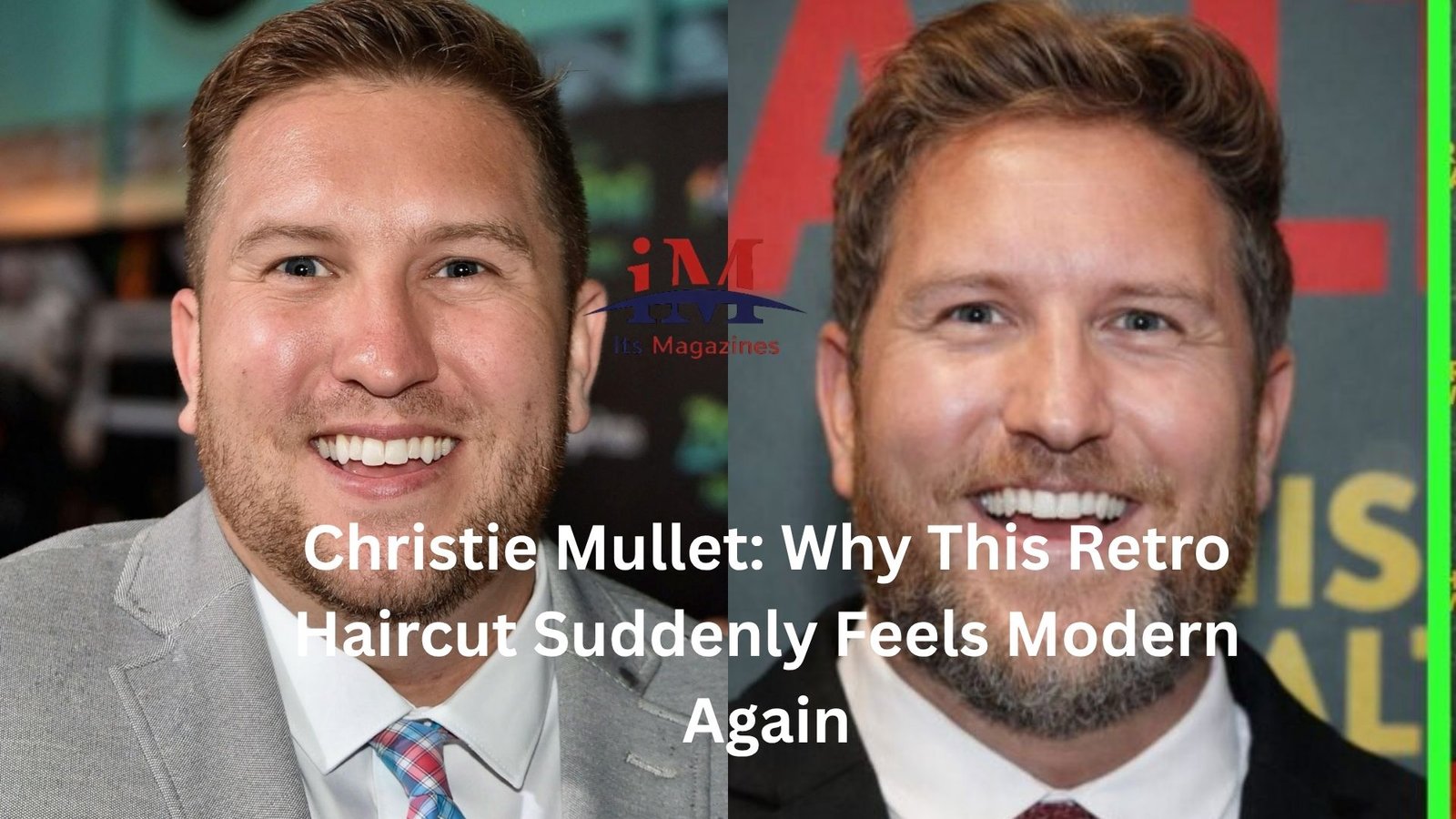
There’s something oddly satisfying about a haircut that refuses to behave.
That’s probably why the christie mullet has started showing up everywhere again. Not the stiff, overstyled version people joked about for years. This one’s softer. More wearable. A little rebellious without trying too hard.
You’ve probably seen it already without realizing it had a name. A slightly shaggy crown. Texture around the face. Enough length in the back to move naturally instead of sitting flat like a helmet. It has that “I woke up like this” energy, except someone definitely spent time getting the layers right.
And honestly, it works on more people than you’d expect.
The funny thing about hair trends is that they usually return after everyone swears they never will. Low-rise jeans. Tiny sunglasses. Frosted makeup. The mullet had the longest road back because people associated it with old-school rock bands, awkward yearbook photos, and questionable grooming decisions from the 1980s.
Now? Different story.
The christie mullet feels less like a costume and more like personality.
What Exactly Is a Christie Mullet?
At its core, the christie mullet blends classic mullet structure with softer, more flattering layers. Think less “business in the front, party in the back” and more controlled texture with movement throughout.
The top usually carries volume without looking bulky. The sides stay feathered or slightly tapered. The back keeps enough length to create shape, but not so much that it turns into a dramatic tail.
That balance matters.
A harsh mullet can look aggressive if the proportions are off. The christie version avoids that by making everything flow together naturally. It borrows from shag cuts, wolf cuts, and layered rock-inspired styles without fully committing to any one category.
Hairdressers love cuts like this because they can customize them endlessly.
Someone with thick hair might get heavier texture through the crown. Someone with fine hair might keep softer layers to avoid looking too thin. Curly hair creates a completely different effect than straight hair, but somehow the cut still works.
That flexibility is a huge part of why it’s sticking around.
Why People Suddenly Want It Again
A lot of modern hairstyles feel overly polished. Every strand sprayed into place. Every curl identical. After a while, people get tired of looking too finished.
The christie mullet goes in the opposite direction.
It looks better when it moves. Better when it’s imperfect.
That’s refreshing.
There’s also a bigger cultural shift happening around beauty standards. People aren’t chasing one universal “perfect” look the way they used to. Personality matters more now. Haircuts have become part of someone’s identity instead of just a trend copied from a magazine cover.
You can see it in coffee shops, concerts, even office spaces that used to feel conservative about appearance.
Someone walks in with a textured mullet and suddenly they seem more interesting. Not because the haircut is outrageous, but because it signals confidence. It says they’re comfortable making a style choice that isn’t completely safe.
And let’s be honest — safe can get boring fast.
The Difference Between This and the Old-School Mullet
This matters because people still hear “mullet” and picture something extreme.
The older version often had sharp disconnection between short and long sections. Sometimes it looked accidental. Sometimes it looked aggressively intentional in the worst way.
The christie mullet softens everything.
Layers blend together instead of creating hard lines. Stylists focus on texture instead of dramatic length contrast. The overall effect is more modern and less theatrical.
Picture someone sitting in a salon saying, “I want something edgy but still flattering.”
That’s basically the assignment.
Another major difference is styling. Traditional mullets often relied on stiff products and obvious shaping. Today’s version works best when it feels touchable.
Sea salt spray. Lightweight mousse. Air drying. Maybe a diffuser if someone has curls.
Nothing too precious.
It Works Surprisingly Well With Different Face Shapes
This haircut survives because it adapts.
Round faces often benefit from extra height at the crown. Square jawlines look softer with feathered layers around the cheeks. Longer face shapes can use fuller sides to create balance.
Even bangs can completely change the vibe.
Curtain bangs make the christie mullet feel relaxed and effortless. Choppy fringe pushes it into cooler, punk-inspired territory. Wispy pieces around the eyes create a softer version that almost feels French in a messy, lived-in way.
That customization keeps people interested.
One person’s christie mullet might look artistic and dramatic. Another person’s version could feel subtle enough for everyday wear. Same foundation. Totally different energy.
I’ve even seen people who normally stick to classic shoulder-length cuts try a toned-down variation after years of playing it safe.
Usually the reaction is the same: “Why didn’t I do this earlier?”
The Styling Isn’t As Hard As People Think
This surprises people most.
A haircut that looks textured and layered seems high maintenance from the outside. In reality, the christie mullet often requires less effort than heavily polished styles.
The cut does most of the work.
Good layering naturally creates movement, so people spend less time fighting with curling irons or flat irons every morning. In some cases, the slightly messy finish actually improves the overall look.
Second-day hair tends to work really well here.
That’s a gift, honestly.
Anyone who has spent 45 minutes trying to make perfectly smooth hair survive humidity understands the appeal of a style that welcomes imperfection instead of resisting it.
Still, products matter a little.
Heavy wax can make the layers clump together awkwardly. Strong hairspray usually kills the softness. Lightweight texture sprays work better because they keep movement intact.
A tiny amount goes a long way.
Too much product turns cool texture into greasy confusion pretty quickly.
Why Younger Generations Love It
Part of this trend comes from nostalgia cycling back around every couple decades. But there’s another reason the christie mullet connects with younger people specifically.
It photographs well without looking overproduced.
Social media changed beauty trends in strange ways. Ultra-perfect styles started feeling repetitive because everyone was editing themselves into the same face and same hair. The christie mullet stands out because it has character.
Messy layers catch light differently. Texture creates dimension. Movement makes photos feel more alive.
And beyond aesthetics, there’s attitude attached to it.
The haircut carries a little edge without demanding full commitment to an alternative lifestyle. Someone can wear vintage band tees one day and a blazer the next, and the haircut somehow fits both situations.
That versatility matters now more than ever because personal style has become less rigid overall.
The Salon Conversation Matters More Than the Reference Photo
Here’s the thing people learn quickly with this haircut: communication matters.
Showing one celebrity photo rarely works because the christie mullet depends heavily on hair texture, density, and lifestyle. A stylist needs context.
Do you air dry your hair?
Do you want volume or less bulk?
Are you willing to style bangs?
How often do you actually want trims?
Those answers shape the final result more than the inspiration picture itself.
A good stylist also knows when to hold back.
Some people walk in wanting a dramatic transformation and realize halfway through they’re not emotionally prepared for that much texture or length contrast. Starting softer usually works better. More layers can always be added later.
Hair regret tends to happen when someone chases a trend instead of adapting it to themselves.
The best christie mullets look personal, not copied.
It’s Not Just a Trend Anymore
At first, a lot of people assumed the mullet comeback would disappear quickly. That seemed reasonable. Fashion revives weird things all the time for six months before everyone moves on.
But this one stayed.
The reason is simple: the modern version solves real style problems.
It gives volume to flat hair. Removes heaviness from thick hair. Creates shape without demanding perfection. Adds personality without becoming impossible to wear daily.
That combination is hard to replace.
You can also evolve it over time. Grow it longer and it becomes more rock-and-roll. Soften the layers and it shifts toward shag territory. Trim the back and it starts leaning almost pixie-like.
Few haircuts transition that easily between phases.
That flexibility keeps salons busy with variations instead of one rigid version everyone abandons after a season.
The Confidence Factor Nobody Talks About
Hair changes how people carry themselves. Not in a dramatic movie-montage way. More subtle than that.
Someone experiments with a cut outside their comfort zone and suddenly they stop overthinking every little detail about their appearance. They loosen up a bit.
The christie mullet seems to create that effect often.
Maybe because it already embraces imperfection.
When your haircut isn’t trying to look flawless all the time, you relax. Wind messes it up? Fine. Humidity changes the texture? Still works. A few layers fall differently today? That’s part of the look.
There’s freedom in that.
And ironically, people often look cooler when they stop trying so hard to appear polished.
Should Everyone Get One?
Probably not.
Some people genuinely prefer clean, structured styles with precise lines. Nothing wrong with that. Hair should feel like an extension of someone’s personality, not a forced trend experiment.
But for people craving movement, texture, and something with a little edge, the christie mullet makes a strong case for itself.
Especially now, when so many styles blur together online.
This cut still has individuality.
That’s rare.
And honestly, that’s what keeps bringing people back to it. Not nostalgia. Not shock value. Just the fact that it feels alive in a way many modern hairstyles don’t.
A good christie mullet doesn’t sit stiffly in place all day.