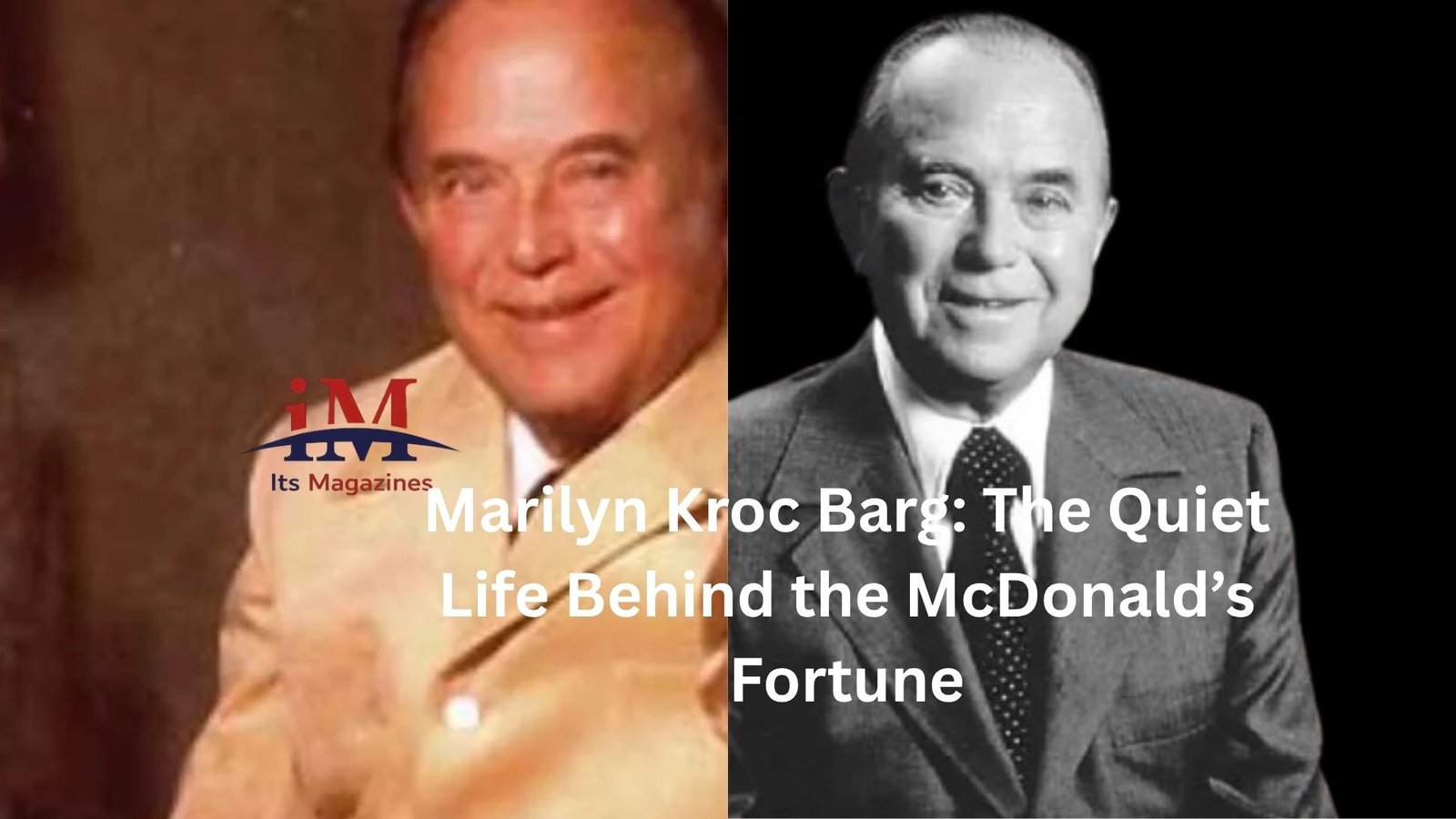
Most people know the McDonald’s story through Ray Kroc. The hard-driving businessman. The expansion. The golden arches on every corner. But far fewer know about Marilyn Kroc Barg, his only child, whose life unfolded in a much quieter, more complicated way.
And honestly, that contrast is what makes her story interesting.
She grew up close to one of the most recognizable business empires in American history, yet she remained largely outside the spotlight. No endless interviews. No celebrity image. No major public campaign to carry the family name forward. For someone connected to enormous wealth and influence, Marilyn Kroc Barg lived with a surprising level of privacy.
That alone says something.
Growing Up as Ray Kroc’s Daughter
Marilyn Janet Kroc was born in 1924 to Ray Kroc and his first wife, Ethel Fleming. At that point, Ray Kroc wasn’t the billionaire businessman people later came to know. He was still trying to figure life out professionally, moving through different jobs and opportunities.
That matters because Marilyn didn’t grow up in instant wealth.
People often assume children of famous business figures are raised in luxury from day one. In reality, Ray Kroc’s massive success came later. During Marilyn’s early years, the family’s life was far more ordinary than most would expect.
Imagine being a child watching your father constantly chase the next opportunity. One month things seem stable. Another month there’s uncertainty. That kind of environment shapes people. It can create ambition, but it can also create emotional distance.
By the time McDonald’s exploded into a global brand during the 1950s and 1960s, Marilyn was already an adult. The transformation of her father into a cultural and business icon happened alongside her own adulthood, marriages, and personal life.
That timing probably affected their relationship in ways outsiders never fully understood.
Living Near Fame Without Chasing It
Here’s the thing about inherited fame: some people lean into it completely. Others pull away from it.
Marilyn Kroc Barg seemed to belong firmly in the second group.
Unlike many children of wealthy founders, she didn’t become a public business figure tied to the McDonald’s corporation. You don’t see endless quotes from her in business magazines. She didn’t turn herself into a media personality. In many ways, she stayed remarkably private despite carrying one of the most recognizable family names in American business history.
That privacy has led to curiosity over the years. People search for her because they expect dramatic family stories or corporate involvement. Instead, they find a woman who largely kept her life personal.
And maybe that’s understandable.
Being connected to a globally famous parent can become exhausting. Every achievement gets compared. Every mistake gets magnified. Some people decide the best response is simply stepping away from the noise.
The Complicated Nature of Wealth
When discussions about the Kroc family come up, money inevitably enters the conversation.
Ray Kroc became extraordinarily wealthy after transforming McDonald’s into a worldwide powerhouse. But large fortunes don’t automatically create close family dynamics or simple inheritances. Families with enormous wealth often become more complicated, not less.
There have long been discussions about Marilyn’s relationship with her father and about how Ray Kroc structured his estate. Public attention intensified because much of Ray Kroc’s fortune eventually became associated with philanthropy through his third wife, Joan Kroc, who donated billions to charitable causes after his death.
That left many people wondering where Marilyn fit into the picture.
The reality is that public records and reports suggest Marilyn inherited wealth during her lifetime, but the broader Kroc fortune became more connected to charitable giving than to a long multi-generational family dynasty.
That’s unusual in American business culture.
Think about names like Rockefeller or Walton. Those families built public dynastic identities around inherited wealth. The Kroc story unfolded differently. Much of the money moved toward philanthropy rather than toward creating a highly visible family empire across generations.
Her Personal Life Stayed Deeply Private
One reason Marilyn Kroc Barg continues to generate curiosity is the lack of detailed public information about her personal life.
Today, people are used to knowing everything about wealthy families. Social media alone has changed expectations completely. Children of billionaires now become influencers, startup founders, podcast hosts, or public activists before they turn thirty.
Marilyn belonged to a different era entirely.
Privacy still existed then. In fact, wealthy families often treated privacy almost like a responsibility. Personal struggles stayed behind closed doors. Family tensions weren’t discussed publicly. Media exposure wasn’t automatically viewed as positive.
So while bits and pieces of her life became public over time, much of it remained intentionally out of view.
That silence has created speculation, but it also reflects a generation that approached public attention very differently from today’s culture.
The Shadow of a Larger-Than-Life Father
It’s impossible to talk about Marilyn Kroc Barg without acknowledging the enormous presence of Ray Kroc himself.
Ray wasn’t just successful. He was relentless.
Biographies and interviews over the years have painted him as intensely driven, deeply focused on business growth, and often consumed by work. People who build companies at that level tend to live in extremes. Their energy can be inspiring, but it can also leave limited emotional room for family life.
Children of highly ambitious founders often grow up navigating complicated emotional territory. On one hand, there’s admiration. On the other, there can be absence. Public success doesn’t always translate into private closeness.
That’s not unique to the Kroc family either.
You see versions of this pattern in countless business dynasties. The founder becomes obsessed with building something massive. The world celebrates the achievement. Meanwhile, family relationships become layered, strained, or distant in ways outsiders rarely see.
Marilyn’s life quietly reflects that reality.
Why People Still Search for Marilyn Kroc Barg
There’s an interesting reason her name continues appearing in searches decades later.
People are fascinated by hidden figures connected to famous stories.
Ray Kroc’s life has been dissected through books, documentaries, and movies. McDonald’s itself became one of the defining business stories of the twentieth century. Naturally, curiosity spreads to the people closest to him.
But Marilyn Kroc Barg stands apart because she never fully entered the public narrative. There’s mystery there. Not scandal-driven mystery necessarily, but the mystery of absence.
Sometimes the people who say the least become the most intriguing.
A public figure constantly explains themselves. A private figure leaves room for interpretation. That’s part of why interest in Marilyn hasn’t completely faded despite the relatively limited public information available about her life.
A Different Kind of Legacy
When people hear the word “legacy,” they usually picture buildings, companies, foundations, or giant financial empires.
But personal legacy works differently.
Marilyn Kroc Barg’s story highlights something easy to overlook: not everyone connected to power wants visibility. Some people inherit fame without wanting to participate in its machinery.
That’s a very modern lesson, oddly enough.
Today there’s constant pressure to build a public identity. Share more. Brand yourself. Turn every family connection into influence. Yet Marilyn’s life points in almost the opposite direction. She lived near enormous public attention while largely declining to become part of the spectacle.
There’s something quietly dignified about that.
The Human Side of Famous Families
Let’s be honest, people sometimes flatten wealthy families into caricatures.
We assume billionaire families live in permanent glamour or endless dysfunction. Reality tends to be more ordinary and more complicated at the same time. They still deal with emotional distance, expectations, generational conflict, and personal struggles.
The Kroc family story reflects those tensions.
A father becomes one of the most famous businessmen in America. A daughter grows up partly before the success arrives. Wealth changes everything around the family dynamic. Public attention intensifies. Relationships evolve under pressure.
That’s deeply human, even if the financial scale is extraordinary.
You can almost picture the contrast. One side of life involves boardrooms, franchise deals, and national recognition. The other side involves family dinners, private disagreements, birthdays, and emotional gaps no amount of money automatically fixes.
Those quieter realities often tell us more than the headlines do.
Marilyn Kroc Barg’s Place in American Business History
Even though Marilyn herself wasn’t a business executive or major public figure, her life still sits adjacent to one of America’s defining corporate stories.
McDonald’s changed global culture in ways few companies ever have. It transformed fast food, franchising, advertising, suburban development, and even everyday eating habits. Ray Kroc became symbolic of postwar American capitalism.
As his only child, Marilyn occupies a unique historical position within that story.
But unlike many heirs connected to giant corporations, she never became a central public steward of the brand. Her role remained personal rather than corporate. And because of that, she’s remembered less for public achievements and more for her connection to a larger cultural narrative.
That may sound limiting, but it also preserved a level of personal privacy many famous families never get to keep.
The Quiet Takeaway
Marilyn Kroc Barg’s life won’t fit neatly into the usual billionaire-family storyline. There’s no dramatic corporate takeover, no celebrity reinvention, no giant public campaign attached to her name.
Instead, her story feels quieter. More restrained. More human.
She lived close to extraordinary wealth and historic business success while remaining mostly outside the public machinery surrounding it. In a culture obsessed with visibility, that choice stands out even more today than it did during her lifetime.
And maybe that’s why people still search for her name.
Not because she demanded attention, but because she didn’t.