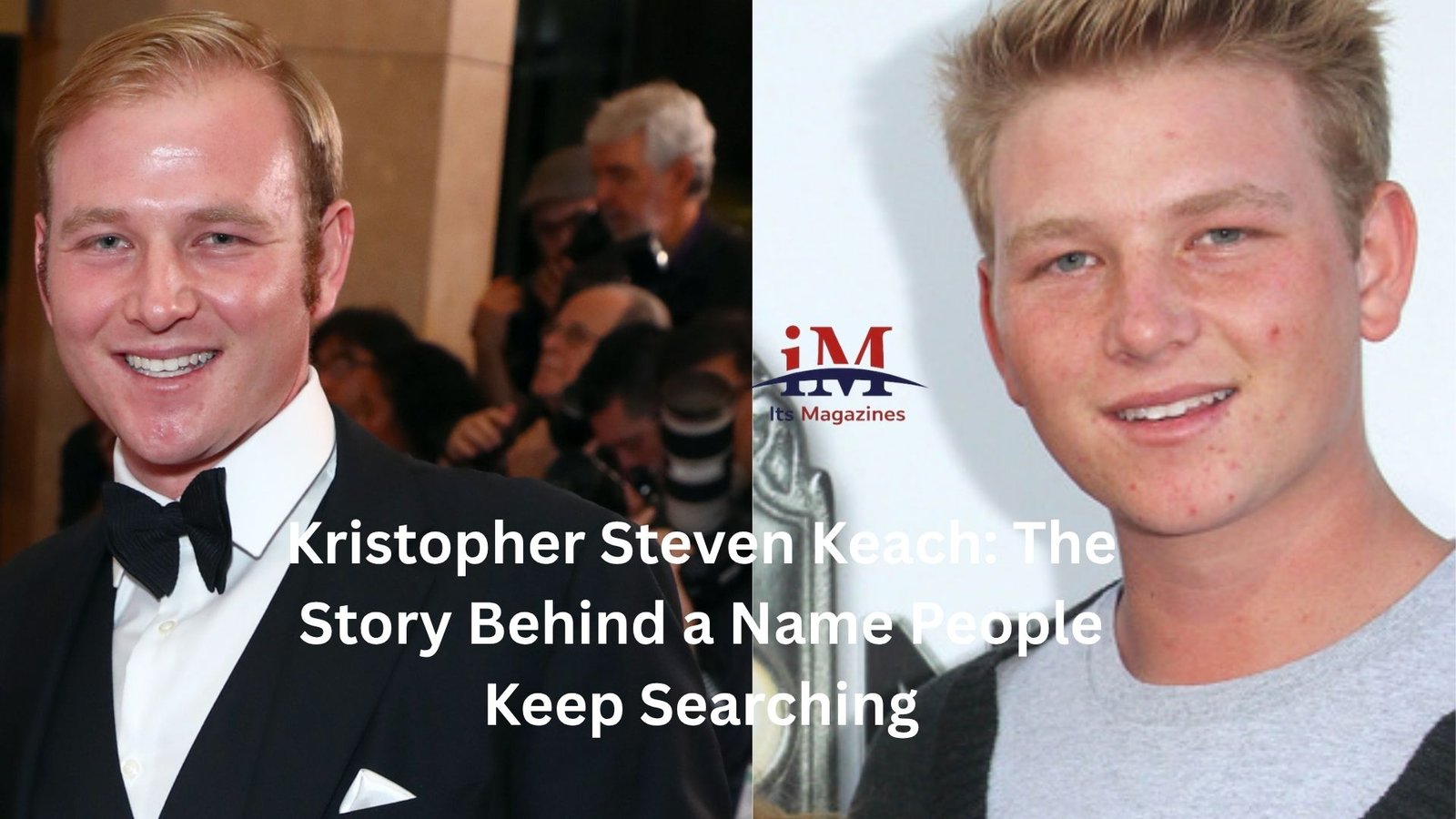
Some names pop up online for a few days and disappear. Others quietly stick around. Kristopher Steven Keach falls into that second category. It’s the kind of name people search because they think they’ve heard it somewhere before, or because it sounds connected to a familiar family, public figure, or old Hollywood thread.
And honestly, that curiosity makes sense.
The internet has turned names into little puzzles. One mention in a public record, a passing reference on social media, or a connection to a known surname can send people digging for details. But with Kristopher Steven Keach, there’s something interesting happening: people search for the name, yet there’s very little widely confirmed public information available.
That alone says a lot about how modern attention works.
Why Certain Names Catch Attention
The surname “Keach” immediately rings a bell for many people because of the well-known acting family associated with Stacy Keach and the late James Keach. Even if someone can’t place exactly where they’ve heard it, the name carries a familiar rhythm.
Now, that doesn’t automatically mean every person with that surname belongs to the same public lineage. People often make assumptions online based on shared last names alone. It happens constantly. Someone spots a unique surname and suddenly there’s speculation everywhere.
Here’s the thing: the internet rarely pauses before connecting dots.
That’s part of why searches around Kristopher Steven Keach continue. People are trying to figure out whether there’s a larger story attached to the name or whether it simply belongs to someone who briefly crossed into public visibility.
And that tension — public curiosity mixed with limited information — is surprisingly common now.
The Internet Doesn’t Forget Small Mentions
A generation ago, most people could live fairly private lives unless they were celebrities, politicians, or involved in major news stories. Today, even a minor mention somewhere online can create a searchable identity that lasts for years.
Maybe someone appeared in a local article. Maybe their name was attached to a public database. Maybe there was a legal filing, a business listing, or an old social profile that search engines indexed years ago.
Once that happens, people start searching.
You’ve probably experienced a smaller version of this yourself. You meet someone briefly, forget where you heard their name, then type it into Google days later because it’s bothering you. Human curiosity works like that.
With Kristopher Steven Keach, the searches seem driven more by curiosity than by a large public biography. There simply isn’t a massive trail of verified interviews, public appearances, or mainstream media coverage attached to the name.
And oddly enough, that mystery often creates more attention, not less.
People Are Fascinated by Partial Information
Let’s be honest. Humans hate incomplete stories.
If someone sees a name online with very little context, the brain immediately starts trying to fill the gaps. That’s why obscure names sometimes generate more discussion than heavily documented public figures.
There’s room for speculation.
But there’s also an important line between curiosity and assumption. Online culture sometimes forgets that a searchable name still belongs to a real person. A lack of public information doesn’t automatically mean hidden drama or secret significance. Sometimes it simply means someone hasn’t lived a highly public life.
That distinction matters.
Not everybody wants their digital footprint expanded into a full internet narrative. In fact, many people actively avoid public exposure now because they’ve seen how quickly online speculation can spiral.
The Shift Toward Digital Identity
One reason names like Kristopher Steven Keach attract ongoing searches is because people now treat search engines almost like public memory archives.
Years ago, if somebody wasn’t famous, their name stayed mostly local. Friends knew them. Family knew them. Maybe coworkers did too. That was about it.
Now a name can exist online independently of the person’s actual day-to-day life.
That changes things.
A single searchable result can create an impression that feels larger than reality. Someone could have a tiny digital footprint yet still become the subject of repeated searches simply because their name surfaced somewhere noticeable.
You see this often with uncommon names. The more distinctive the name sounds, the more likely people are to remember and search it later.
Kristopher Steven Keach fits that pattern perfectly. It’s formal enough to sound notable, uncommon enough to stand out, and familiar enough to trigger recognition.
That combination tends to stick in people’s heads.
Privacy Has Become a Strange Luxury
There’s another angle worth talking about here. In 2026, genuine privacy feels rare.
A lot of people assume every name online should come with detailed biographies, photos, career timelines, and social profiles. When that information doesn’t exist, it almost feels unusual.
But maybe it shouldn’t.
Maybe the surprising thing isn’t that information about Kristopher Steven Keach appears limited. Maybe the surprising thing is how accustomed we’ve become to knowing everything about strangers.
Think about how quickly people expect access now. One search and they want hometowns, family history, employment records, opinions, and social activity. That expectation didn’t really exist twenty years ago.
And honestly, there’s something refreshing about encountering a name that still has boundaries around it.
The Problem With Online Assumptions
One issue with lesser-known names is that misinformation spreads easily. Once one site guesses at details, other sites often repeat the same claims without verification.
Suddenly speculation starts looking like fact.
That’s why it’s smart to approach searches involving names like Kristopher Steven Keach carefully. If information can’t be clearly verified through trustworthy public sources, people should resist the urge to treat rumors as established truth.
It sounds obvious, but online culture doesn’t always reward patience.
There’s pressure to “figure someone out” immediately. Social media especially encourages fast conclusions. But real lives are usually more complicated and less dramatic than internet narratives suggest.
Sometimes a person is simply… a person.
No scandal. No hidden celebrity connection. No giant mystery.
Just somebody whose name ended up indexed online.
Why Name Searches Feel Personal
There’s also a psychological side to all this.
Searching a name creates a weird sense of connection. Even if people know almost nothing about someone, the act of looking them up feels personal. It creates the illusion that there must be a story waiting underneath.
And occasionally there is.
But often, the search itself says more about modern curiosity than about the person being searched.
People want context. They want to understand where names fit in the larger social map. Was this person involved in entertainment? Business? Public records? Family history? Old news coverage?
The uncertainty keeps people clicking.
Kristopher Steven Keach seems to exist right in that space where public curiosity outweighs publicly available detail. That balance naturally keeps interest alive because there’s no definitive online narrative closing the loop.
The Difference Between Public and Searchable
Here’s an important distinction people miss all the time: being searchable is not the same thing as being public.
Someone can appear in search results without actively participating in public life. Search engines don’t really care about intent. If information exists digitally, it can become searchable regardless of whether the person wanted visibility.
That creates awkward situations sometimes.
A person with minimal online presence can suddenly become the subject of speculation simply because their name surfaced somewhere indexed by algorithms. Friends search them. Strangers search them. Random websites scrape data. Before long, the name develops a tiny ecosystem online.
That doesn’t necessarily reflect the person’s actual life.
With Kristopher Steven Keach, the available public footprint appears limited enough that broad assumptions would probably be unfair. And frankly, that’s true for many people whose names circulate online without clear context.
Curiosity Isn’t Going Away
Search culture isn’t slowing down anytime soon. If anything, people are becoming even more interested in tracing names, histories, and digital identities.
Part of that comes from how fragmented modern life feels. Names become anchors. We search because we want connection, familiarity, or explanation.
Sometimes we’re trying to remember where we heard the name.
Sometimes we think there’s a larger story.
And sometimes we’re simply curious because the internet trained us to expect answers instantly.
But not every search ends with a complete profile. Not every person becomes fully documented online. There are still gaps. Still private corners. Still names that exist without detailed public narratives attached to them.
Kristopher Steven Keach appears to be one of those names.
A Name That Reflects the Internet Age
What makes this topic interesting isn’t celebrity gossip or hidden scandal. It’s the way a single searchable name can reflect broader internet behavior.
People search because they’re curious.
Search engines preserve fragments.
Online speculation fills silence quickly.
And privacy becomes harder to define.
That entire cycle shows up in situations exactly like this one.
A name enters public visibility somehow, even briefly, and suddenly strangers start looking for context that may not actually exist in public form. The mystery becomes part of the interest.
Oddly enough, limited information often keeps attention alive longer than complete transparency would.
Final Thoughts
Kristopher Steven Keach remains a name that sparks online curiosity largely because there isn’t a massive public record attached to it. In a digital culture built around instant access and endless information, that absence stands out.
People naturally want to connect dots. That’s human nature.
But there’s value in recognizing the limits of what’s publicly known too. Not every searchable name comes with a fully documented story, and not every person connected to online curiosity is trying to live publicly.
Sometimes the internet creates intrigue where there may simply be ordinary life behind the screen.
And maybe that’s the most interesting part of all.