If you’ve spent any time scrolling through messages, TikTok comments, or Snapchat chats, you’ve probably seen “wyll” pop up and wondered what it actually means. It looks like a typo at first. Or maybe some kind of inside joke. But it’s neither.
“Wyll” is just shorthand. Simple, quick, and very online.
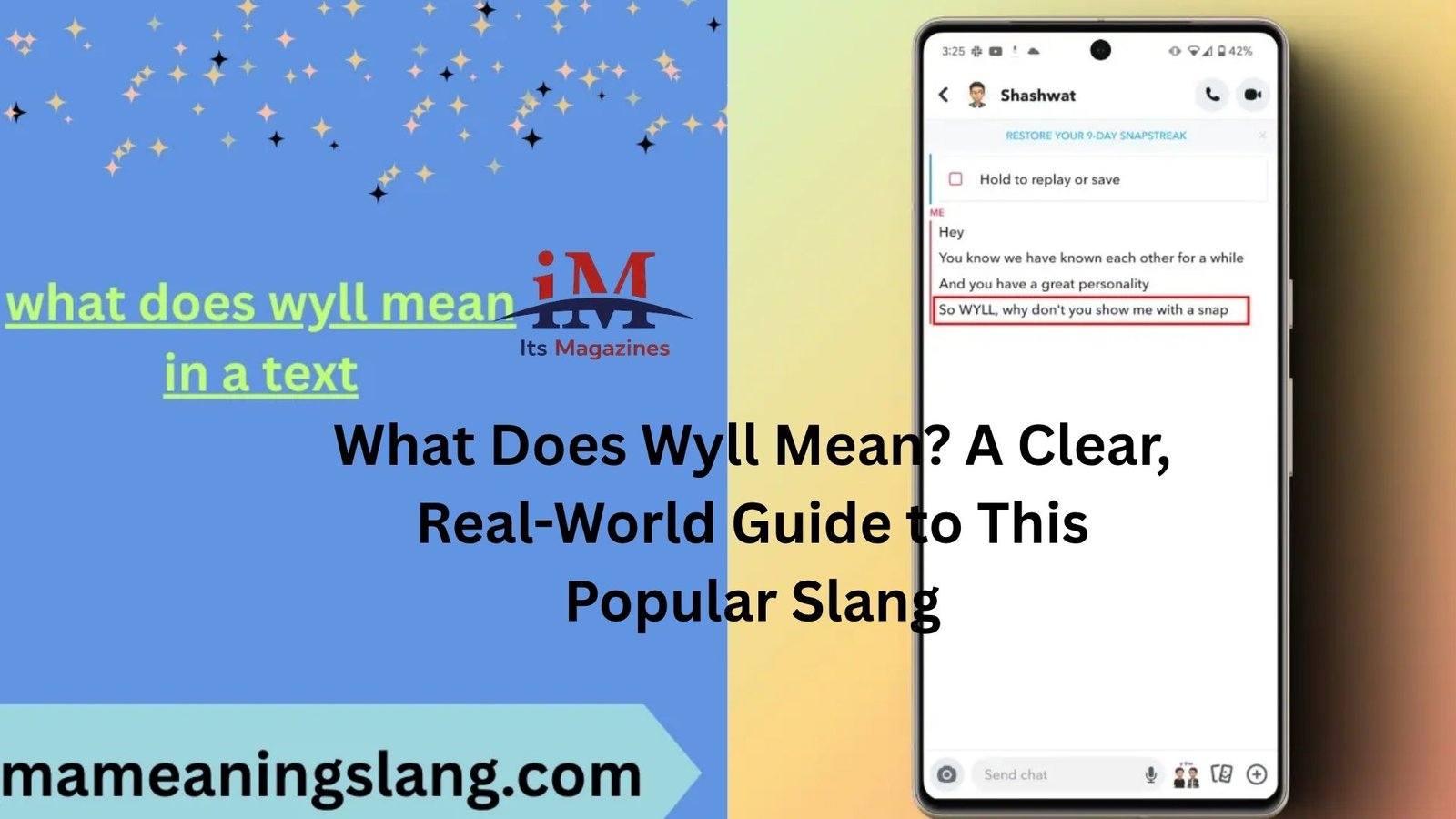
It stands for: “what you look like?”
That’s it. But like most internet slang, the meaning goes a bit deeper depending on how, where, and why it’s used.
Let’s break it down in a way that actually makes sense in real life.
Where “Wyll” Comes From
“Wyll” didn’t come from a dictionary or a specific moment. It grew out of texting culture, where speed matters more than spelling. People shorten everything. “You” becomes “u.” “Are” becomes “r.” And eventually, full questions get compressed into tight little codes.
“What you look like?” turns into:
W = what
Y = you
L = look
L = like
Put it together, and you get “wyll.”
It’s not formal. It’s not meant to be. It’s the kind of thing you type fast, without thinking too hard, usually in casual or slightly flirty conversations.
How People Actually Use “Wyll”
Now here’s where it gets interesting. “Wyll” isn’t just about asking for someone’s appearance. It’s often about curiosity, attraction, or even suspicion.
Picture this.
You’ve been chatting with someone for a while. Maybe you met through a game, a comment thread, or a friend of a friend. The conversation is going well. There’s a bit of back and forth, maybe even some jokes.
Then they drop:
“wyll?”
That’s their way of saying, “Okay, but what do you actually look like?”
It’s direct, but not overly serious. Almost like a soft push.
Sometimes it shows genuine interest. Other times, it’s just casual curiosity. And occasionally, let’s be honest, it’s someone trying to decide if they want to keep the conversation going.
The Tone Behind It Matters
“Wyll” can feel different depending on how it’s used.
In some cases, it’s playful. Someone might say:
“you seem cool… wyll?”
That reads like light curiosity. No pressure. Just interest.
Other times, it can feel a bit abrupt:
“wyll”
No greeting. No buildup. Just straight to the point. That version can come off a little blunt, even transactional.
Tone is everything here. Since it’s text, you don’t get facial expressions or voice cues. So the same word can feel friendly or awkward depending on context.
Is “Wyll” Rude?
Short answer: not necessarily.
But it can be.
It depends on timing and delivery.
If someone asks “wyll” too early in a conversation, it might feel like they only care about looks. That can turn people off quickly. Nobody likes feeling judged before they’ve even had a real conversation.
On the other hand, if you’ve been talking for a while, it can feel like a natural next step. People are curious. That’s normal.
Here’s a simple way to think about it:
- Early conversation + “wyll” = can feel shallow
- Ongoing conversation + “wyll” = usually harmless curiosity
It’s not the word itself. It’s the moment it shows up.
Why “Wyll” Became So Popular
There’s something about short, slightly cryptic slang that spreads fast online. “Wyll” fits perfectly into that pattern.
It’s quick to type.
It feels informal.
It signals you’re “in the know.”
And more importantly, it avoids sounding too serious.
Compare these two:
“What do you look like?”
vs
“wyll?”
The first one feels heavier. The second feels casual, almost throwaway.
That’s why people use it. It lowers the stakes of the question, even if the intent is the same.
When You Might See It
You’re most likely to run into “wyll” in places where conversations move fast and people don’t overthink their words.
Think:
- Snapchat chats
- Instagram DMs
- TikTok comments or messages
- Gaming chats
- Dating-style conversations that aren’t officially “dating”
It shows up where people are meeting casually, often without much context about each other.
You probably won’t see it in emails. Or professional settings. Or anywhere people are trying to sound polished.
It belongs to a very specific corner of communication: quick, informal, and slightly impulsive.
How to Respond to “Wyll”
This is where things get personal.
There’s no single “correct” response. It depends on what you’re comfortable with.
If you’re okay sharing, you might reply with a photo or a simple description. No big deal.
If you’re not comfortable, you can deflect without making it awkward:
“haha maybe later”
“let’s talk a bit more first”
“why, you judging me already?”
That last one adds a bit of humor, which can ease the situation.
And if the question rubs you the wrong way, it’s completely fine to ignore it or change the subject. You don’t owe anyone your appearance.
The Subtle Pressure Behind It
Let’s be honest for a second.
Even though “wyll” looks casual, it can carry a bit of pressure.
It puts you in a position where you feel like you have to “show yourself” to keep the conversation going. That’s especially true in online spaces where people decide quickly whether they’re interested.
Some people don’t mind that at all. Others find it uncomfortable.
Neither reaction is wrong.
It’s just worth recognizing that behind this tiny four-letter word, there’s often a bigger dynamic at play: curiosity mixed with judgment.
Similar Slang You Might Notice
“Wyll” isn’t alone. It’s part of a whole family of shorthand phrases people use online.
You might see things like:
- “wyd” (what you doing)
- “wya” (where you at)
- “hmu” (hit me up)
They all follow the same pattern. Strip the sentence down to its initials and keep it moving.
But “wyll” stands out because it asks something more personal. It’s not about what you’re doing or where you are. It’s about how you look.
That makes it slightly more loaded than the others.
A Quick Reality Check
Here’s the thing.
“Wyll” feels very current right now, but slang moves fast. What’s popular today might feel outdated in a year or two.
That’s how online language works. It evolves constantly, shaped by trends, platforms, and younger users pushing new ways to communicate.
So while “wyll” is common now, it’s just one moment in a much bigger cycle of digital slang.
Final Thoughts
“Wyll” is simple on the surface. It just means “what you look like?” But the way it’s used tells you more than the words themselves.
It can signal interest. Curiosity. Attraction. Sometimes even impatience.
The key is context. Who’s asking, when they ask, and how the conversation feels overall.
If you understand that, you won’t just know what “wyll” means. You’ll know what it really means in the moment.
And that’s what actually matters.