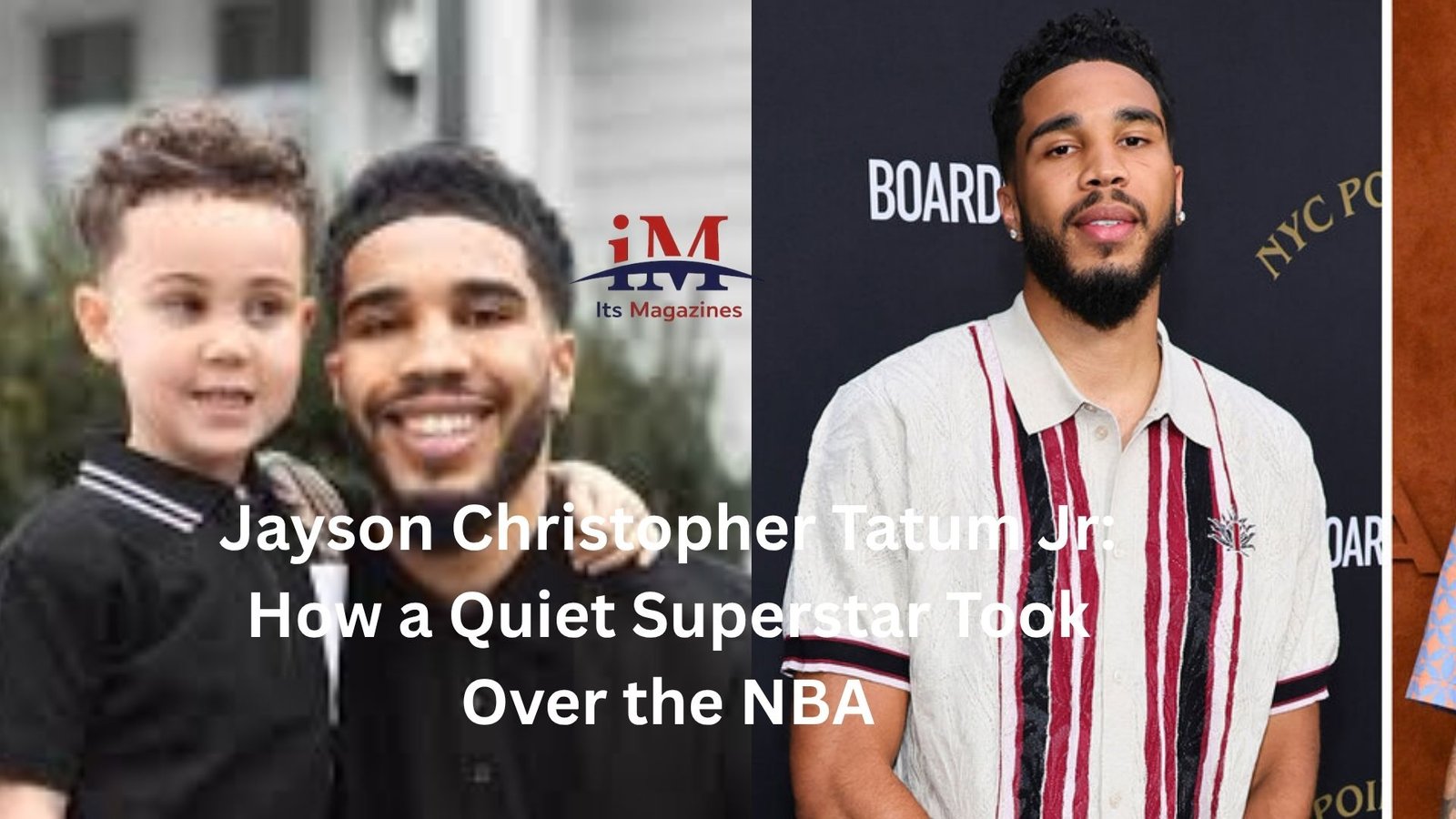
There’s something unusual about Jayson Christopher Tatum Jr. in a league built on noise.
He doesn’t dominate headlines with controversy. He’s not constantly chasing viral moments. Yet somehow, year after year, he keeps ending up exactly where every player wants to be — deep in the playoffs, carrying massive expectations, and looking more polished every season.
That’s not an accident.
Tatum has become one of the NBA’s defining stars because he mastered the hard part early: consistency. Not flashy consistency either. The kind coaches trust, teammates lean on, and opponents quietly dread.
You can see it in the way defenses react the second he crosses half court. A slight hesitation. A quick switch. Sometimes two defenders shading toward him before he even makes a move.
That respect wasn’t handed to him because of hype. He earned it.
The Early Years Didn’t Feel Like a Future MVP Story
A lot of superstar stories get cleaned up over time. People act like greatness was obvious from day one.
Tatum’s path wasn’t exactly that.
He grew up in St. Louis, raised largely by his mother, Brandy Cole, who became a lawyer while supporting him through basketball. That detail matters because it shaped the way people around the NBA describe him now: disciplined, composed, unusually mature for his age.
Even as a teenager, Tatum carried himself differently. Coaches noticed it. He wasn’t the loudest player in the gym, but he paid attention. He studied the game.
At Chaminade College Preparatory School, he became one of the top high school recruits in the country. By then, scouts already loved the smooth scoring ability. The footwork stood out immediately. So did the patience.
Most young stars rush.
Tatum rarely does.
That’s still true today.
Duke Was Short, But It Changed Everything
His college career at Duke lasted only one season, but it sharpened his reputation fast.
Mike Krzyzewski trusted him early, which says plenty on its own. Freshmen at Duke don’t automatically get freedom. They earn it.
Tatum averaged solid numbers, but the bigger takeaway was how complete his offensive game already looked. Mid-range shots. Turnarounds. Controlled drives. Calm under pressure.
NBA teams saw a player who could create his own offense without relying purely on athleticism.
That distinction matters more than fans sometimes realize.
Explosive players can disappear when defenses tighten in the playoffs. Shot creators survive because they can still manufacture points when everything gets ugly late in games.
Boston understood that.
The Celtics Took a Chance — And Got Rewarded Quickly
When the Boston Celtics selected Tatum with the third overall pick in the 2017 NBA Draft, there were questions.
Some analysts thought Markelle Fultz or Lonzo Ball had higher ceilings. Others wondered whether Tatum’s old-school scoring style would fully translate to the modern NBA.
That debate looks almost funny now.
His rookie season immediately shifted expectations.
Boston dealt with injuries to Kyrie Irving and Gordon Hayward, and suddenly this rookie had real responsibility during a playoff run. Most first-year players would shrink under that pressure.
Tatum got better.
He scored against elite defenders. He attacked LeBron James without fear. One dunk on LeBron during the Eastern Conference Finals became a defining moment, not because Boston won the series — they didn’t — but because of the confidence behind it.
A 20-year-old rookie simply decided he belonged on that stage.
That mentality changed the trajectory of the franchise.
Why Tatum’s Game Works So Well
Some superstars overwhelm you physically. Others dominate through speed.
Tatum’s greatness is more layered than that.
He’s around 6-foot-8 with long arms, excellent balance, and one of the smoothest offensive packages in basketball. But the real secret is rhythm. He plays at his own pace.
Defenders hate guarding players like that.
One possession, he’ll use a hesitation dribble and glide into the lane. Next time down, he’ll stop suddenly for a pull-up jumper. Then comes the fadeaway. Then the side-step three.
There’s never one answer.
And unlike many elite scorers, he’s become a serious defender too. That part of his evolution doesn’t always get enough attention.
Early in his career, some critics wondered whether he’d settle into being “just” a scorer. Instead, he developed into a complete two-way player capable of guarding multiple positions while carrying a huge offensive load.
That’s rare territory.
Very few players can score 30 points and still defend at a high level deep into May and June.
The Pressure of Playing in Boston Is Different
Here’s the thing about Boston sports fans: they remember everything.
They remember bad playoff possessions from years ago. They compare current stars to legends constantly. One cold shooting stretch can become a week-long debate on sports radio.
That environment can swallow talented players.
Tatum handled it better than most.
Not perfectly, though. And honestly, that’s part of why people connect with him.
There were stretches where he forced tough shots. Times when critics questioned his leadership. Playoff losses that lingered all offseason.
You could feel the frustration after some of those games. The body language. The pressure building.
But each season, he adjusted.
That’s the difference between stars and franchise anchors. Stars react emotionally. Franchise anchors evolve.
Tatum learned how to trust teammates more consistently. He improved as a passer. He got stronger physically. Even his shot selection became smarter over time.
The growth happened in public, which makes people underestimate how difficult it really is.
The Deuce Factor Changed His Public Image
Not every athlete becomes more relatable after becoming famous.
Tatum did.
A huge part of that comes from his relationship with his son, Deuce.
NBA broadcasts constantly show the two together after games, walking through arenas, sitting at press conferences, celebrating playoff wins. Normally that kind of exposure can feel staged.
With Tatum, it rarely does.
It feels natural because it probably is.
Fans see a superstar who also seems genuinely invested in fatherhood, and that changes how people view him. He stopped being just an elite scorer from Boston. He became human in a way casual sports fans could instantly understand.
You don’t even need to follow basketball closely to recognize that connection.
And honestly, in an era where athlete branding can feel overly polished, that authenticity matters.
The Championship Conversation Followed Him Everywhere
For years, the biggest criticism surrounding Tatum was simple: could he lead a team to a title?
Fair question.
Superstars get judged differently. Nobody remembers conference finals forever. Eventually the conversation narrows to championships.
Boston kept getting close. Deep playoff runs. Big performances. Painful exits.
Sometimes Tatum looked unstoppable. Other times he struggled with efficiency at the worst possible moments. That inconsistency fueled nonstop debates online and on television.
But playoff growth rarely happens in a straight line.
Michael Jordan didn’t win immediately. Neither did LeBron James. Even all-time greats needed years to figure out how to navigate the emotional and tactical grind of postseason basketball.
Tatum went through that same process under an intense spotlight.
The important part wasn’t avoiding failure. It was returning stronger after it.
His Leadership Looks Different Than Older NBA Icons
People still expect superstar leadership to look like Michael Jordan screaming at teammates or Kobe Bryant challenging everyone publicly.
Tatum isn’t built that way.
He leads more quietly.
At first, some fans mistook that calm personality for passiveness. But teammates consistently describe him as steady, approachable, and reliable during pressure moments.
Different eras value different styles.
Today’s locker rooms often respond better to collaboration than intimidation. Tatum seems to understand that naturally. He doesn’t need every camera pointed at him after wins, and he rarely creates unnecessary drama after losses.
That approach may not generate viral clips every week, but over an 82-game season, stability matters.
Especially in Boston, where expectations never relax.
The NBA Keeps Changing — Tatum Keeps Adapting
One reason Tatum remains so valuable is flexibility.
The NBA changes constantly. Defensive schemes evolve. Three-point volume increases. Matchups become more positionless every year.
Some stars struggle to adjust when the league shifts around them.
Tatum keeps adding layers.
His passing against double teams improved dramatically. His post game became more reliable. He learned when to attack quickly and when to slow games down.
Even physically, he transformed. Early-career Tatum looked lean and skilled. Current Tatum looks stronger, tougher, more prepared for playoff basketball.
You notice it late in games when defenders bounce off him instead of moving him off spots.
That kind of progression usually comes from obsessive work behind the scenes.
And while basketball conversations often focus on talent, sustained greatness almost always comes down to adjustment.
Why Fans Respect Him — Even Outside Boston
Not every NBA star earns broad respect across fanbases.
Tatum mostly has.
Part of it is his style of play. Pure scorers still fascinate basketball fans. There’s something satisfying about watching someone create difficult shots without looking rushed.
Part of it is professionalism.
He avoids constant controversy. He shows up. He plays through pressure. He takes criticism without turning every comment into public drama.
That matters more than people admit.
Sports fans may love chaos online, but deep down they respect reliability.
There’s also a growing appreciation for how durable he’s been while carrying massive responsibility. Modern NBA stars often miss significant stretches of games. Tatum has consistently logged heavy minutes and embraced huge workloads.
Coaches notice that. Teammates definitely notice it.
The Legacy Question Is Already Starting
It sounds strange because he’s still in the middle of his career, but legacy conversations have already started around Tatum.
That’s what happens when a player reaches superstar status early.
People begin asking bigger questions:
Can he become the greatest Celtic since Larry Bird?
Will he finish with multiple championships?
Could he eventually enter all-time top-player discussions?
Those are difficult standards. Boston history isn’t exactly short on legends.
But Tatum has already positioned himself in rare company statistically and culturally within the franchise. And he’s done it while carrying expectations that would wear down plenty of players.
Maybe the most impressive part is that he still feels unfinished.
You watch him now and still see room for growth. Better playmaking. More command in late-game situations. Even stronger leadership presence.
That’s dangerous for the rest of the league.
Because players with elite talent usually plateau at some point. Tatum still looks like someone searching for another level.
The Bigger Picture Around Jayson Christopher Tatum Jr
Basketball history tends to simplify players over time.
People remember rings, MVP races, signature moments.
But the full picture matters too.
Jayson Christopher Tatum Jr became a superstar while handling enormous expectations in one of the NBA’s toughest markets. He evolved from gifted scorer to complete player without dramatically changing who he was personally. He stayed composed in a sports culture that rewards extremes.
That combination is harder to find than people think.
And maybe that’s why his rise feels so sustainable.
There’s no sense of frantic chasing with Tatum. No constant reinvention for attention. Just steady improvement, year after year, under pressure most players never experience.
The NBA always searches for its next face. Sometimes the loudest personalities grab that role immediately.
Other times, a quieter superstar simply keeps winning until everyone notices they’ve been watching greatness all along.