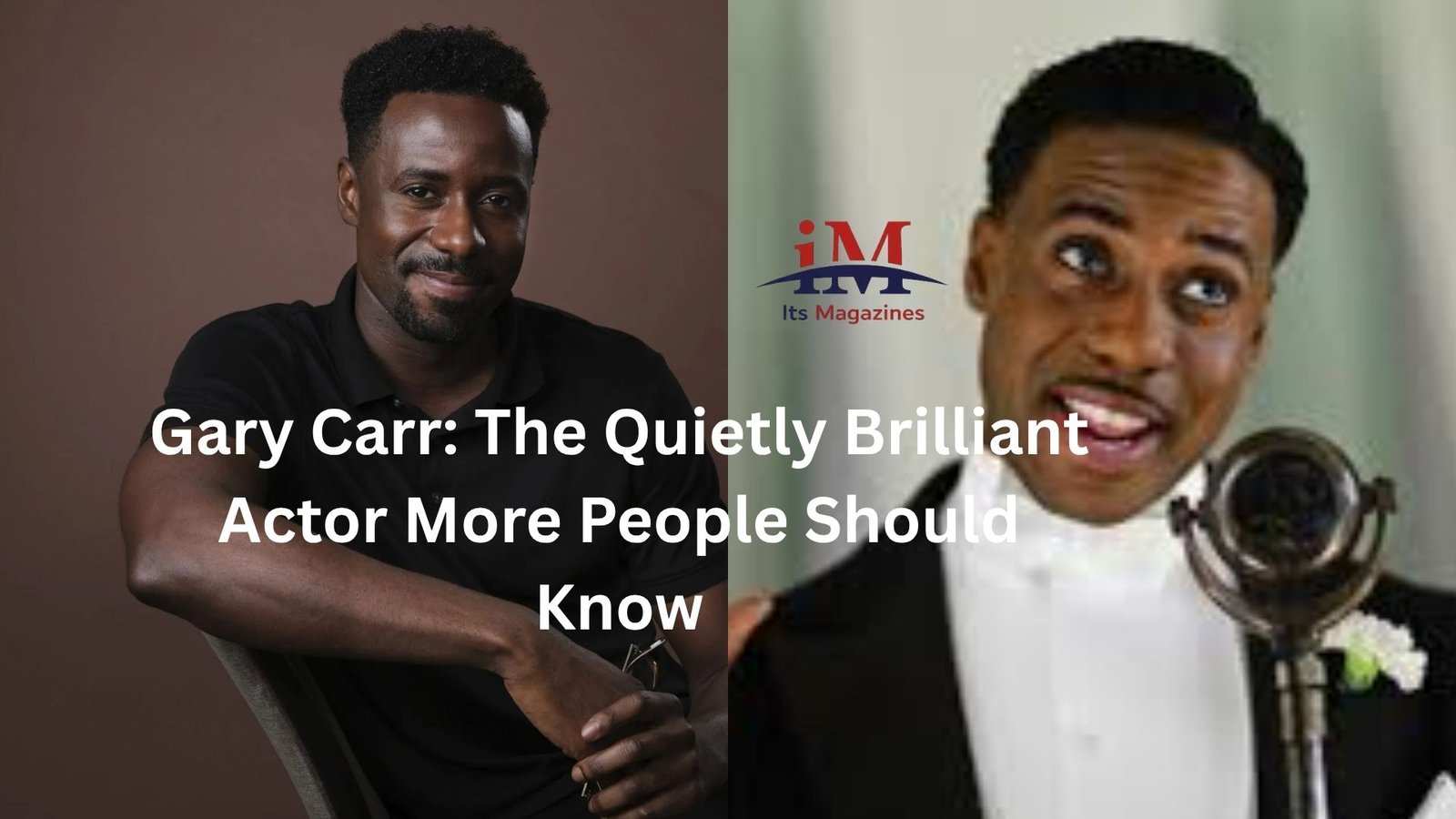
Some actors walk into a scene and demand attention. Others pull you in slowly. Gary Carr belongs to the second group, and that’s probably why people remember him long after the credits roll.
He’s never been the loudest name in entertainment. You won’t see endless tabloid stories or constant headlines chasing him around. But if you’ve watched Downton Abbey, The Deuce, or even caught him on stage in London years ago, chances are you’ve noticed something unusual about him. He makes characters feel lived in. Real. Messy in believable ways.
That’s harder to do than it looks.
A lot of actors can deliver lines. Fewer can make silence interesting. Gary Carr has built a career on that difference.
Gary Carr didn’t take the typical route
One thing that stands out about Gary Carr is how grounded his career feels. He wasn’t pushed into instant blockbuster fame. There was no overnight superhero launch or viral celebrity moment. Instead, he worked steadily through theatre, television, and character-driven roles that let him sharpen his craft.
Born in London in 1986, Carr trained at the London Academy of Music and Dramatic Art, better known as LAMDA. That already tells you something. British drama schools like LAMDA have a reputation for being intense. Actors come out technically sharp, but the best ones also develop discipline. You can usually spot it in performances.
Before mainstream audiences knew his name, Carr was doing stage work. That matters more than people think.
Stage acting forces actors to hold attention without camera tricks, editing, or close-ups. If someone can command a theatre audience night after night, they usually bring a different kind of control to screen work later.
And Carr has that control.
His role in Downton Abbey changed everything
For many viewers, Downton Abbey was the first real introduction to Gary Carr.
He played Jack Ross, a jazz singer who becomes romantically involved with Lady Rose. On paper, the role could’ve been small. A temporary side character. But Carr made Jack Ross memorable because he played him with restraint rather than drama.
That relationship storyline carried more weight than people sometimes remember.
In 1920s Britain, a Black jazz singer being romantically involved with an aristocratic white woman would have been seen as highly controversial, both within the story and in the society it reflected. It reflected real racial tensions of the era. Carr handled the role carefully, avoiding caricature or overplaying the social conflict. He gave Jack Ross dignity and calm confidence.
That subtlety made the character believable.
There’s a tendency in period dramas to turn socially difficult storylines into obvious speeches or exaggerated confrontations. Carr didn’t go that route. His performance felt quieter, more human.
And honestly, that’s probably why it worked.
You could imagine someone like Jack Ross actually existing in that world.
The Deuce showed another side of Gary Carr
If Downton Abbey introduced him to wider audiences, HBO’s The Deuce showed how much range he really had.
The series, created by David Simon and George Pelecanos, explored New York’s porn industry and street culture during the 1970s and 1980s. It was gritty, layered, and emotionally heavy. Not exactly comfortable viewing at times.
Carr played C.C., a manipulative pimp with charm, menace, and unpredictability all tangled together.
Completely different energy from Jack Ross.
That shift is where Carr becomes especially interesting as an actor. Some performers essentially play variations of themselves in every project. Gary Carr doesn’t. His physicality changes. His voice changes. Even the pacing of his dialogue feels different depending on the role.
C.C. could’ve become cartoonishly cruel in the wrong hands. Instead, Carr gave the character unsettling realism. He made him charismatic enough to understand why people followed him, while still revealing the ugliness underneath.
That balance matters.
Viewers don’t necessarily want villains who twirl metaphorical mustaches anymore. The most disturbing characters are often the believable ones. The people who can smile warmly while manipulating everyone around them.
Carr understood that dynamic perfectly in The Deuce.
There’s something old-school about his acting style
Watching Gary Carr sometimes feels a little unusual in today’s entertainment landscape.
A lot of modern acting leans heavily on intensity. Constant emotional explosions. Big reactions. Endless dramatic monologues designed to become social media clips.
Carr often works in smaller movements.
A glance. A pause before answering. A slight shift in tone.
It reminds you of actors from earlier eras who trusted audiences to pay attention without over-explaining everything.
That approach won’t always generate viral moments, but it creates lasting performances.
Think about real life for a second. Most people don’t announce every emotion directly. Tension usually shows up indirectly. Through hesitation. Through avoidance. Through body language.
Carr seems very aware of that.
That’s part of why his characters rarely feel artificial.
He moves comfortably between British and American productions
Some actors struggle when crossing between UK and US productions. The pacing is different. The tone is different. Even dialogue rhythms change.
Gary Carr adapts surprisingly well.
British television often values understatement and precision. American prestige dramas, especially HBO-style storytelling, tend to allow more emotional sprawl and grit. Carr fits into both environments naturally.
That flexibility has helped his career stay interesting.
Instead of being trapped in one recognizable lane, he’s been able to move between historical drama, crime stories, theatre, and psychologically darker material without feeling out of place.
Actors who survive long-term usually have that adaptability.
A quick example: imagine two performers auditioning for radically different projects — a polished period drama and a raw urban crime series. Many actors would feel miscast in one of them. Carr somehow feels believable in both.
That’s not common.
Fame never seemed to become the point
One thing people often notice about Gary Carr is how relatively low-key he remains compared to many actors with similar résumés.
And honestly, that’s refreshing.
Entertainment culture has shifted heavily toward constant visibility. Actors today are often expected to become full-time public personalities alongside their actual work. Social media presence can sometimes overshadow performances themselves.
Carr appears more selective and private.
That doesn’t mean he lacks ambition. It just suggests he may care more about the work than celebrity branding. There’s a difference.
You can feel that in the kinds of projects he chooses.
They tend to prioritize character complexity over flashy exposure.
For viewers, that creates trust. When Gary Carr appears in something, there’s usually a sense that the role interested him creatively, not just commercially.
Theatre training still shows in his performances
Even people who know nothing about acting technique can usually sense when someone has strong theatre roots.
There’s often a physical confidence involved. A control over movement and posture that feels deliberate without becoming stiff.
Carr has that quality.
His scenes rarely feel rushed. He knows how to let moments breathe.
That sounds simple, but modern screen acting sometimes moves too fast. Dialogue gets clipped. Emotional beats disappear because productions fear losing audience attention.
Carr doesn’t panic in silence.
You’ll notice it especially during tense scenes. He allows pauses to create discomfort naturally instead of forcing intensity through volume.
A good example comes from The Deuce. Some of his most unsettling moments happen when he appears calm. The restraint makes the character more dangerous.
That’s theatre discipline at work.
Why audiences connect with him
There’s also a broader reason Gary Carr keeps gaining loyal viewers.
He feels approachable.
Not ordinary exactly, but human in a recognizable way.
Some actors create distance through polished perfection. Carr doesn’t rely on that style. Even when playing confident characters, he leaves room for vulnerability or uncertainty underneath.
That makes people lean in.
You see this especially in ensemble casts. He rarely fights scenes for attention, yet your eye still drifts toward him because his reactions feel authentic.
A small moment can suddenly become memorable because of how naturally he responds.
And let’s be honest, audiences are getting better at spotting performances that feel fake or overly engineered. Viewers spend hours consuming content every day. They know when emotions are being pushed too hard.
Carr’s performances tend to avoid that trap.
His career feels built for longevity
Some careers burn bright and disappear quickly. Others develop steadily over time.
Gary Carr feels like the second type.
There’s a reason certain actors remain respected for decades without necessarily becoming constant tabloid-level celebrities. They build trust with directors, writers, and audiences through consistency.
Carr has been doing exactly that.
His choices suggest patience rather than desperation. He’s willing to take supporting roles if the material is strong. He doesn’t seem trapped by image management. That freedom allows him to keep evolving.
And in many ways, character actors often age better professionally than traditional stars.
Audiences eventually crave depth over novelty.
You can already see Carr moving into that space comfortably.
The industry needs more actors like Gary Carr
The entertainment world sometimes rewards noise over nuance.
Big personalities dominate conversation. Algorithms push extremes. Performances become meme material within hours.
But actors like Gary Carr remind people why subtle craft still matters.
Not every performance needs to scream for attention. Some become powerful precisely because they don’t.
He brings intelligence to roles without making characters feel overly calculated. He understands restraint. He trusts viewers to interpret emotion instead of spelling everything out.
That creates richer storytelling.
And frankly, it makes rewatching his work more rewarding too. You notice details the second time around that you missed initially.
That’s usually a sign of strong acting.
Gary Carr’s appeal keeps growing quietly
Gary Carr may never become the most overexposed celebrity in entertainment, and that could actually work in his favor.
There’s something compelling about actors who continue surprising audiences instead of constantly selling themselves. His career has unfolded through careful performances rather than hype, and that gives his work lasting weight.
Whether he’s playing a sophisticated jazz singer in a period drama or a deeply unsettling figure in a gritty HBO series, Carr brings realism to every role. He doesn’t force attention. He earns it gradually.
That’s a harder skill than people realize.
And maybe that’s why viewers who discover Gary Carr tend to keep following his work afterward. Once you notice the precision and quiet confidence he brings to a performance, it becomes difficult not to watch closely the next time he appears on screen.