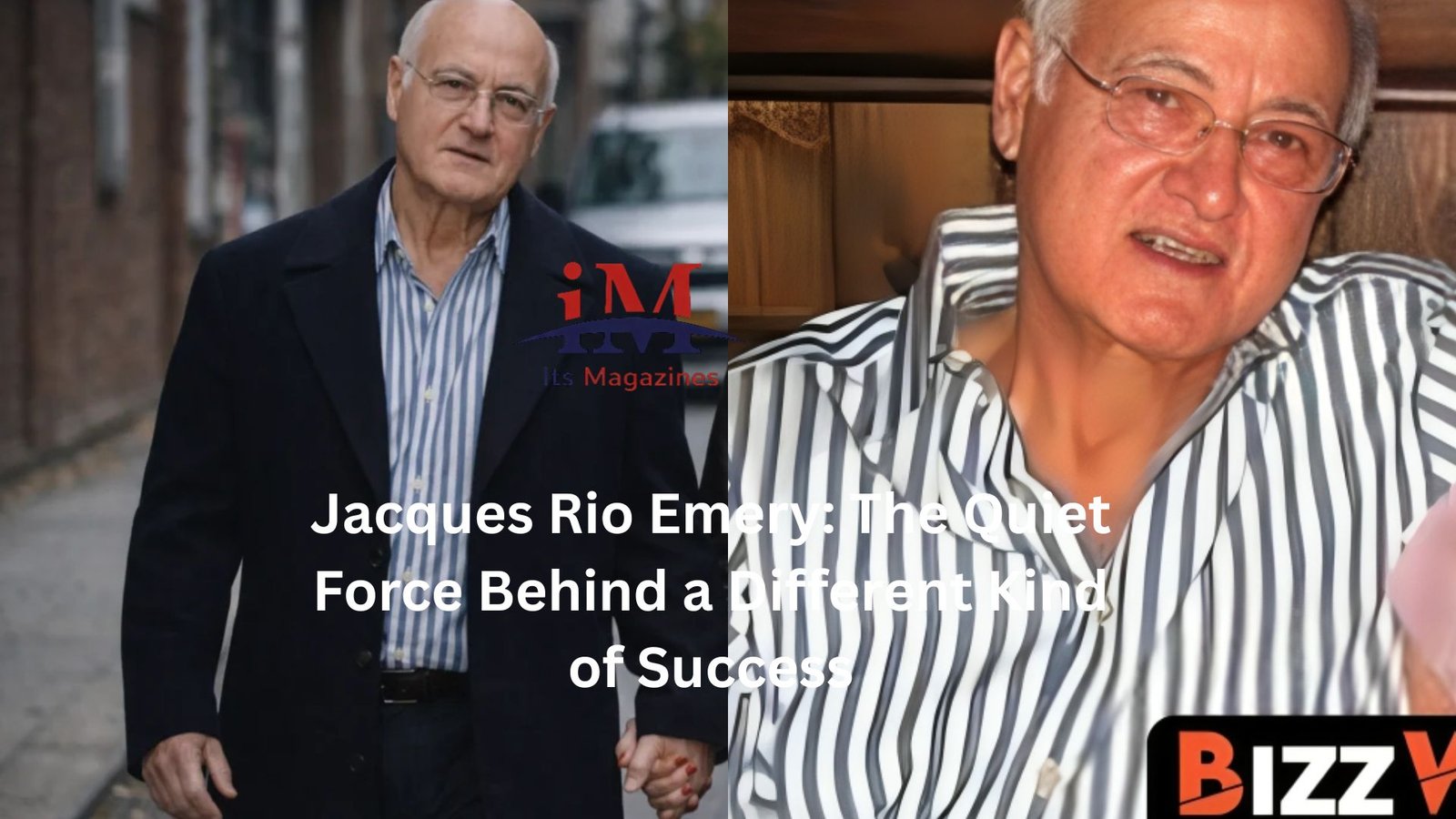
There’s a certain kind of person who doesn’t chase attention but somehow ends up shaping things anyway. Jacques Rio Emery seems to fall into that category.
Not loud. Not overly polished. But steady, thoughtful, and surprisingly influential once you start paying attention.
If you’ve come across his name, chances are it wasn’t through flashy headlines or viral noise. It was probably tucked into something meaningful. A project that worked well. An idea that stuck. A conversation that lingered longer than expected.
That’s usually how it starts with people like him.
The kind of presence you don’t notice at first
Some people dominate a room the moment they walk in. Others don’t need to.
Jacques has the second kind of energy. The quieter one. The kind that builds over time.
Imagine sitting in a meeting where everyone’s throwing out ideas, talking fast, trying to impress. Then there’s one person who waits. Listens. Maybe says nothing for ten minutes. And when they finally speak, the room shifts just a little.
That’s the role he tends to play.
It’s not about being reserved for the sake of it. It’s more deliberate than that. There’s a habit of observation, almost like he’s collecting small details most people skip. And later, those details become useful.
Not in a dramatic way. Just… effective.
A thinking style that favors clarity over noise
Here’s the thing: a lot of people confuse complexity with intelligence.
Jacques doesn’t seem interested in that game.
He leans toward clarity. Strips things down. Gets to what actually matters. That alone makes him stand out in environments where people often overcomplicate to sound impressive.
Let’s say a team is stuck trying to solve a messy problem. There are charts, jargon, endless back-and-forth. Then someone reframes the issue in one simple sentence.
That reset? That’s where his kind of thinking lives.
It’s practical. Grounded. You don’t walk away confused. You walk away knowing what to do next.
Not chasing attention, but building influence anyway
There’s a difference between visibility and impact.
Visibility is easy to fake. Impact isn’t.
Jacques doesn’t seem particularly concerned with being seen everywhere. No constant self-promotion. No loud personal branding. And yet, over time, his influence grows.
Why?
Because people remember outcomes.
They remember when something worked better than expected. When a plan actually held up under pressure. When a decision saved time instead of wasting it.
That’s where credibility comes from. Not from saying you’re good, but from being useful when it counts.
And once people trust that, they start coming back.
A grounded approach to work and ideas
One thing that stands out is how grounded his approach feels.
No obsession with trends for the sake of trends. No jumping onto every new thing just because it’s popular.
Instead, there’s a steady focus on what works.
That might sound obvious, but it’s surprisingly rare.
Think about how often people chase the “next big thing” without fully understanding the basics. It happens everywhere. Business, tech, creative fields. The fundamentals get ignored because they’re not exciting.
Jacques seems to do the opposite.
He builds from the ground up. Makes sure the foundation is solid before adding anything flashy. It’s slower at first, sure. But it holds.
And in the long run, that matters more.
The value of patience in a fast-moving world
We live in a culture that rewards speed.
Fast decisions. Fast results. Fast everything.
But speed can be misleading.
Jacques leans into patience, not as a weakness but as a strategy. He takes time to understand context, to ask the right questions, to avoid unnecessary mistakes.
It’s like cooking something properly instead of microwaving it. Takes longer, but the result is completely different.
You can see this in how he approaches projects. There’s no rush to impress early. The focus is on getting it right.
And ironically, that often leads to better results faster in the end, because there’s less need to fix things later.
How he handles uncertainty
Everyone talks about confidence. Not many talk about uncertainty.
But real work is full of it.
Plans change. Assumptions break. Things don’t go the way you expect.
Jacques doesn’t seem to resist that reality. He works with it.
Instead of pretending to have all the answers, there’s a willingness to adjust. To rethink. To pivot without making it a big dramatic moment.
That’s a skill people underestimate.
Imagine working on something where halfway through, you realize the original idea won’t hold. Some people double down out of pride. Others panic.
A more grounded approach is to calmly say, “Alright, this part isn’t working. Let’s fix it.”
That’s the difference between ego-driven work and outcome-driven work.
A quiet confidence that doesn’t need validation
Confidence shows up in different ways.
Some people express it loudly. Others don’t need to.
Jacques fits into the second group. There’s a sense that he doesn’t need constant validation to keep going. The work itself seems to be enough.
That kind of confidence is subtle, but it’s powerful.
It allows for better decisions because they’re not driven by the need to impress others. It also creates a more stable presence in high-pressure situations.
When things get chaotic, people tend to look for someone who isn’t reacting emotionally to every shift.
That’s where quiet confidence stands out.
Working with people, not just ideas
Ideas are easy to talk about. People are harder to navigate.
And yet, no meaningful work happens without them.
Jacques seems to understand that well. There’s a balance between focusing on the task and respecting the people involved in it.
Not in a forced “team-building” kind of way. More like an awareness that different people bring different strengths, and those differences matter.
Picture a small team working on a tight deadline. Stress levels are high. Miscommunication starts creeping in.
In that situation, someone who can keep things calm, clear, and focused becomes incredibly valuable.
Not by dominating the room, but by stabilizing it.
That’s a different kind of leadership. Less about control, more about alignment.
Why his approach feels relevant right now
It might sound like this kind of approach has always existed. And it has.
But right now, it feels especially relevant.
There’s so much noise. So many opinions. So many people trying to stand out by being louder, faster, more extreme.
And in the middle of that, someone like Jacques offers a contrast.
A reminder that steady still works.
That clarity beats complexity.
That consistency matters more than bursts of attention.
It’s not flashy, but it’s reliable.
And when things get uncertain, reliability becomes a lot more valuable than excitement.
The kind of impact that builds over time
Not all impact is immediate.
Some of it builds slowly, almost invisibly at first.
You don’t notice it in a single moment. You notice it when you look back and realize how much has changed.
That’s the kind of trajectory Jacques seems to follow.
Small decisions that add up.
Thoughtful contributions that stack over time.
A reputation that grows not because it was aggressively pushed, but because it was consistently earned.
It’s a longer path. But it’s also a more stable one.
What you can take from his way of working
You don’t have to copy someone exactly to learn from them.
But there are patterns worth noticing.
Slow down just enough to think clearly.
Focus on what actually works instead of what looks impressive.
Don’t rush to speak if you don’t have something useful to add.
Be okay adjusting when things don’t go as planned.
Build trust through outcomes, not noise.
None of that is revolutionary. But that’s the point.
The basics, done well, still win.
A final thought
There’s something refreshing about people who don’t try too hard to be seen but end up making a real difference anyway.
Jacques Rio Emery fits that mold.
Not because of one big defining moment, but because of a steady pattern of thoughtful work, grounded decisions, and quiet confidence.
In a world that often rewards volume, that kind of presence stands out more than it seems.
And if you pay attention, you start to realize it’s the kind that lasts.